Garage Door Safety Checklist for Automatic Openers
A residential garage door opener is one of those household systems that tends to disappear into the background until something goes wrong. It lifts a heavy moving door, often several times a day, while people, pets, vehicles, storage bins, bicycles, and tools move through the same opening. The convenience is obvious. The risk is just as real.
Automatic residential garage door openers in the United States are subject to a mandatory federal safety standard. That standard requires entrapment protection, such as a photoelectric “electric eye” sensor or an equivalent safety system. The reason is straightforward: a closing garage door must be able to detect an obstruction and reverse before it traps or injures someone. Safety reversal systems are not decorative accessories. They are core safety equipment.
The most important habit for any homeowner is simple: test the safety reversal system monthly. If the garage door fails to reverse when it should, stop using the automatic function until the issue is corrected according to the owner’s manual or inspected by a qualified professional. That one habit does more for garage door safety than any amount of casual confidence in a system that “has always worked fine.”
Why automatic opener safety deserves regular attention
A garage door opener does not make the door itself safe by default. It adds power, automation, remote operation, and convenience. Those advantages also introduce a specific hazard: the door can move when someone is not standing directly at the wall control watching every inch of travel.
Federal safety requirements exist because non-reversing garage door openers have caused serious injuries and fatal entrapment incidents. A properly functioning opener should reverse when the door closes onto an obstruction. If that safety function is missing, disabled, misaligned, or untested, the opener can become dangerous without giving much warning.
In the field, the most concerning garage doors are not always the loudest or oldest. Sometimes the dangerous one is the door that seems normal from the driveway but has a sensor that has been bumped out of position, a reversal system that has not been tested in years, or a remote control left where a child can reach it. Garage door troubleshooting often starts with small observations like these, not with dramatic failures.
There is another practical reason to check the system regularly. A garage door is a physical assembly with moving parts, including the opener, door sections, garage door rollers, garage door tracks, garage door cables, and garage door springs. The opener’s safety equipment does not exist in isolation. It works with the door’s movement. If the door is not moving correctly, if the opener behaves unpredictably, or if the safety sensors do not respond properly, the whole system deserves attention.
The monthly safety habit that matters most
The Consumer Product Safety Commission has repeatedly warned that non-reversing garage door openers are a hazard. Its guidance is clear: the safety reversal system should be tested monthly. If the door fails to reverse, it should be adjusted according to the owner’s manual or inspected by a professional.
That monthly interval is easy to ignore because most garage doors work quietly enough on ordinary days. A homeowner leaves for work, returns in the evening, and presses the remote without thinking about it. A month becomes six months. Six months becomes several years. Then a box, a bike, a child’s toy, or a person enters the path of a closing door, and the only thing standing between inconvenience and injury is a safety system nobody has checked.
A monthly test does not need to become a complicated garage door inspection. It should be deliberate, calm, and consistent. The goal is to confirm that the opener responds correctly when it detects an obstruction or when its entrapment protection is triggered. If the test produces anything uncertain, treat that uncertainty seriously.
Here is a concise monthly checklist for an automatic garage door opener:
That is the core of responsible garage door maintenance for an automatic opener. Many other issues can affect long-term performance, but reversal testing is the safety item that should never be skipped.
Understanding the photoelectric sensor without overcomplicating it
Most homeowners know the photoelectric sensor by its more casual name: the electric eye. It usually refers to the pair of safety devices near the lower part of the door opening that help detect an obstruction. Federal rules require a sensor or an equivalent entrapment protection system on residential automatic openers, so the presence and function of that system are not optional details.
The sensor’s job is not to make the garage door stronger, smoother, or quieter. Its job is to help prevent entrapment. If an object, person, or pet is in the path of a closing door, the opener should not keep forcing the door downward as though nothing is there. A properly functioning system should reverse when closing onto an obstruction.
From a homeowner’s standpoint, the practical question is not whether the sensor has an impressive technical design. The question is whether the system is installed, active, aligned as intended, and working during a real safety test. If the door closes despite a failed test, or if the opener behaves inconsistently, the right response is not to keep trying until it works once. The right response is to consult the owner’s manual or bring in a professional for garage door repair.
One of the more common safety mistakes is treating a sensor problem as a nuisance rather than a warning. If the door will not close normally, some people look for a workaround because they are late for work or trying to secure the house at night. That mindset is understandable in the moment, but it defeats the purpose of the system. A garage door opener that refuses to close may be telling you that its safety protection needs attention.
Children and garage doors: a rule that should not be negotiable
Children should be taught garage door safety, and remote controls should be kept out of their reach. That guidance is simple, but it is often where households get too casual. A garage door remote looks like a harmless button. To a child, it can seem like a toy, especially when pressing it makes a large object move.
A good household rule is that children do not play with wall controls, remotes, keypads, or the moving door. They should not race under a closing door, hang on door sections, or stand near the tracks while the door operates. The instruction should be repeated plainly, not only mentioned once after a new garage door installation.
This matters even in careful households because garage spaces are messy by nature. A garage may be a parking area, storage room, workshop, laundry entry, bike shed, and sports equipment closet all at once. Children move quickly through those spaces, often while adults are loading a vehicle or carrying groceries. A remote left on a low shelf or clipped to a child-accessible place can create a risk before anyone realizes the child has it.
Professional garage door safety is not only about hardware. It is also about controlling who can activate the opener and under what circumstances. If children are present in the home, remote storage belongs on the checklist right beside sensor testing.
When a failed reversal test should stop the door from being used
A failed reversal test is not a minor inconvenience. It means the safety system did not perform the job that makes automatic operation acceptable. If the garage door opener does not reverse when it should, the automatic opener should not be treated as reliable until the problem has been corrected.
The next step depends on the owner’s manual and the condition of the residential garage door repairs Gold Coast system. Some manuals provide adjustment procedures, but not every homeowner is comfortable or qualified to make them. That is especially true if the door’s movement seems unusual, if the opener has been modified, or if the system has a history of intermittent operation. In those cases, a professional garage door inspection is the safer choice.
There is a difference between garage door troubleshooting and guessing. Troubleshooting follows the manufacturer’s instructions, observes the door carefully, and stops when the issue involves parts or conditions beyond a homeowner’s comfort level. Guessing means repeatedly pressing the remote, forcing operation, bypassing a safety feature, or assuming the problem will clear itself. Guessing is how a safety problem becomes a hazard.
If you manage a rental property, a shared garage, or a home where multiple family members use the same opener, document the failed test and tell everyone not to use the automatic function until it is corrected. A safety instruction that only one person knows is not much protection.
The door system around the opener matters
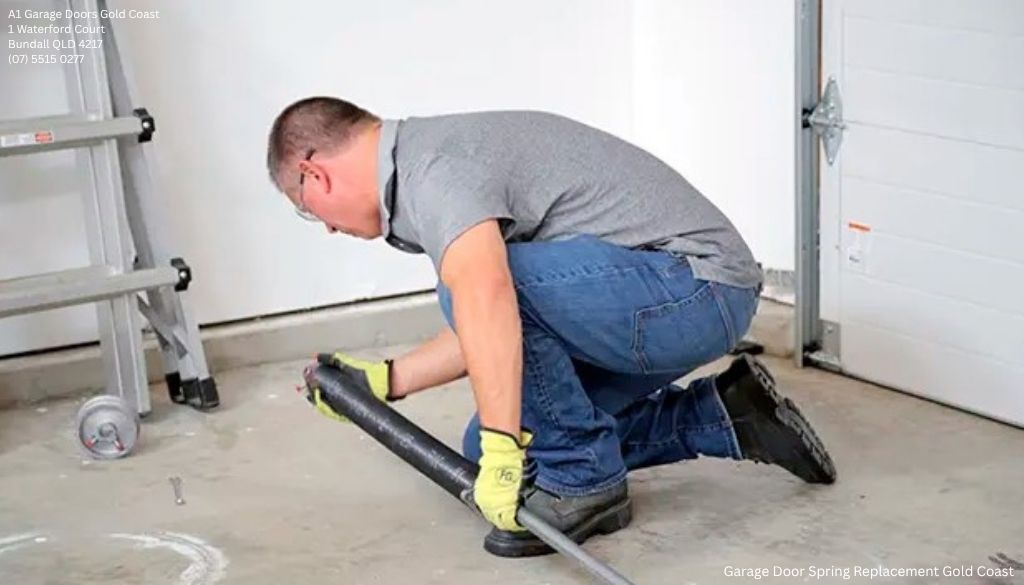
The opener gets most of the attention because it has the motor, remote, and wall button. But the opener is only one part of the system. The door itself rides on garage door tracks, moves on garage door rollers, and depends on components such as garage door cables and garage door springs. Many residential doors use torsion springs, which are part of the counterbalance system that helps the door move as intended.
Those parts matter because an opener is not supposed to overcome a poorly functioning door through brute force. If the door binds, shifts, or moves unpredictably, automatic operation becomes less dependable. Good garage door maintenance means paying attention to the way the whole assembly behaves, not only whether the remote makes the door open.
A homeowner can observe a lot without touching anything dangerous. Watch the door travel. Listen for changes. Notice whether it hesitates, jerks, or appears uneven. Pay attention if the opener strains or if the door no longer moves with the same consistency it had before. These observations do not replace a professional inspection, but they help you recognize when something has changed.
The garage door balance is especially important to the door’s overall operation, but correcting balance problems is not a casual do-it-yourself task. Springs and related hardware can store significant force. If the door appears unbalanced or difficult to control, that is a situation for a qualified garage door repair technician, not trial and error with tools from a household drawer.
What professionals watch for during installation and repair
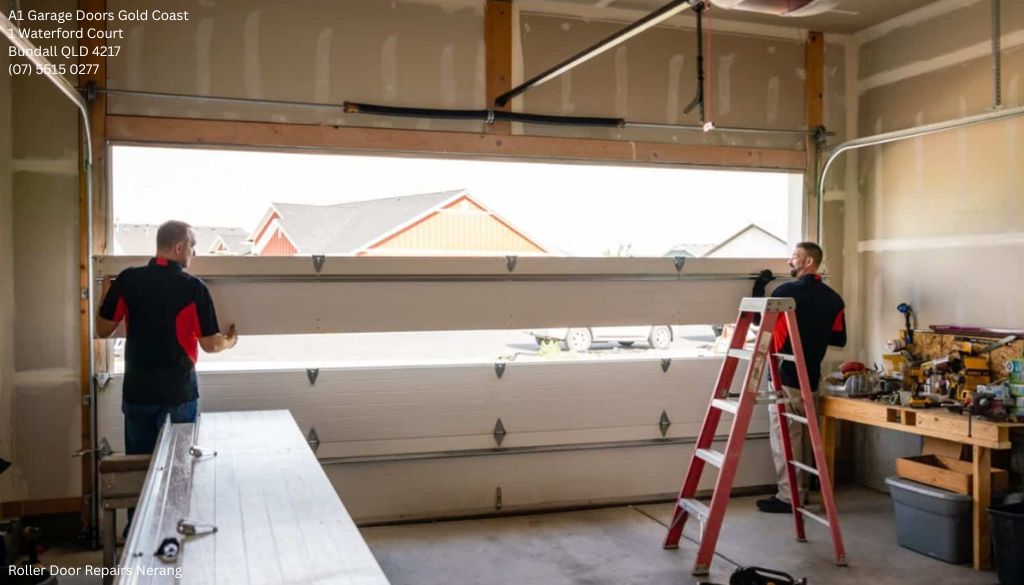
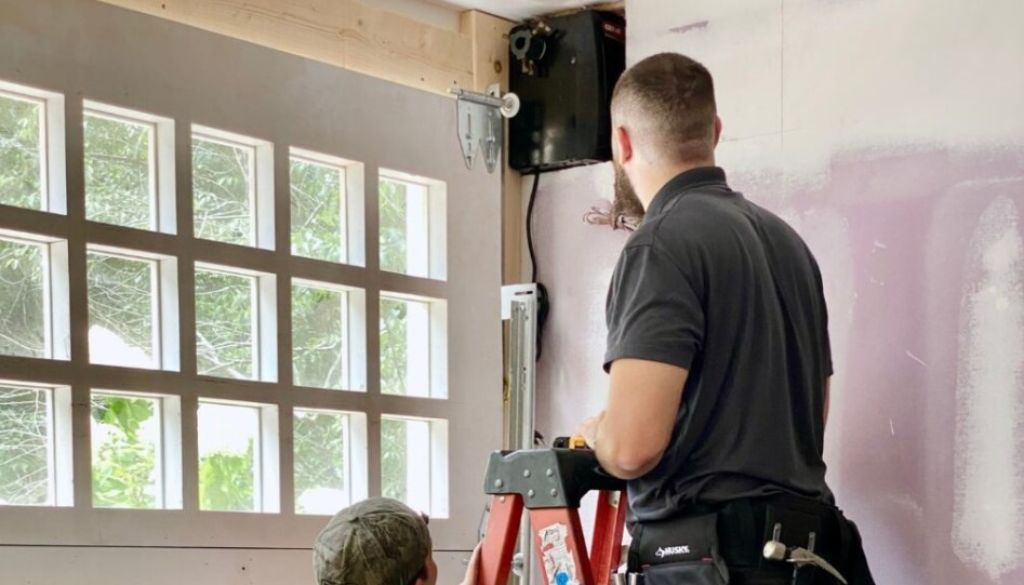
Garage door installation and repair work carries its own hazards. Work often happens at ceiling height, in tight spaces, and around awkward angles. Technicians may be using hand tools while reaching overhead or working near the opener rail, brackets, tracks, and other hardware. Those conditions call for careful staging and a disciplined work area.
This is one reason professional service can look slower than a homeowner expects. A good technician is not simply “taking their time.” They are positioning ladders, checking clearances, managing tools, and avoiding awkward postures where a slip or sudden movement could cause injury. The space above a garage door is not a comfortable workbench. It is an elevated, cramped mechanical area.
For homeowners, the takeaway is not that every small observation requires a service call. The takeaway is that installation and repair should be treated with respect. A new garage door opener, garage door replacement, or repair involving springs, cables, tracks, or the opener mounting should not be rushed. The work affects both daily function and safety reversal performance.
After any garage door installation or significant garage door repair, the safety reversal system should be checked before the door is returned to normal household use. That includes confirming that the required entrapment protection is installed and functioning. A door that opens and closes is not fully ready if the safety system has not been verified.
Sensors, tracks, rollers, and lubrication: keeping maintenance in perspective
Garage door lubrication often comes up in conversations about maintenance, and it has its place in the broader care of the door system. Moving parts need appropriate care according to the door and opener manufacturer’s instructions. However, lubrication is not a substitute for safety testing. A quiet door with a nonworking reversal system is still unsafe.
The same is true for rollers and tracks. Clean-looking garage door tracks and smooth garage door rollers are good signs, but they do not prove that the opener’s entrapment protection is working. A garage door inspection should include the safety system specifically, not merely the mechanical condition of the door.
Sensors deserve the same practical mindset. Do not assume that because the sensor lights appear normal, the system will reverse under test. Do not assume that because the door reversed last year, it will reverse today. Monthly testing exists because function can change over time. The system must be checked as a system, under the conditions described in the owner’s manual.
There is also a judgment call here. Homeowners can keep the sensor area clear, keep controls away from children, watch door movement, and run the prescribed safety test. But if troubleshooting becomes uncertain, or if the owner’s manual does not resolve the issue, it is time to step back. The cost of professional garage door repair is easier to accept than the consequences of using a door with unreliable entrapment protection.
Signs that a professional inspection is the right move
Some garage door problems announce themselves loudly. Others show up as small changes in behavior. The important thing is to avoid minimizing a symptom just because the door still moves. Automatic operation can continue even while a safety issue develops, and that makes routine attention essential.
Call a qualified professional when the situation involves safety reversal failure, uncertain sensor operation, damaged or questionable mechanical parts, or anything that makes the door’s movement seem unreliable. Professional inspection is also wise after a major impact, after significant repair work, or when taking over a home where the opener’s maintenance history is unknown.
A few situations deserve prompt attention:
These are not cosmetic complaints. They affect how safely the door operates. If the issue involves garage door springs, torsion springs, cables, or balance, avoid hands-on repair unless you are properly trained. Those parts are central to the door’s movement and should be handled with the right tools and experience.
Garage door replacement and older openers
If an older opener lacks the required entrapment protection or fails its safety reversal test, replacement may be the responsible path. A repair may be appropriate in some cases, but the key standard is not whether the unit can still pull the door. The key question is whether it operates with the safety protection expected of a residential automatic opener.
Garage door replacement is sometimes discussed only in terms of appearance, insulation, noise, or curb appeal. Those factors matter to homeowners, but safety belongs in the same conversation. A replacement door paired with a questionable opener is not a complete upgrade. A new opener installed on a door with neglected mechanical problems is not ideal either. The system should be considered as a whole.
During a new garage door installation or opener replacement, insist on a final safety check. The door should reverse properly when tested according to the manual, and the photoelectric sensors or equivalent entrapment protection should be present and working. The installer should not leave you guessing about how to perform the monthly check yourself.
For homeowners moving into a new property, the garage door deserves early attention. You may not know whether the prior owner tested the reversal system, adjusted the opener properly, or kept remotes away from children. A simple first-month safety check can reveal whether the opener deserves confidence or service.
A practical approach to garage door troubleshooting
Good garage door troubleshooting starts with patience. If the opener refuses to close, reverses unexpectedly, or behaves differently from normal, slow down and observe. Look for obvious obstructions near the door opening and sensor area. Confirm that people and pets are away from the door. Review the owner’s manual before adjusting anything.
If the issue is related to the safety reversal system, do not treat the system as an obstacle to be defeated. Its purpose is to stop or reverse the door when there may be a hazard. The safest repair path is the one that restores that protection, not the one that merely gets the door closed for the moment.
There is a real-world trade-off here. Homeowners want a secure garage, especially at night or during bad weather. They may feel pressure to force the door closed. But a door that cannot be safely operated by the opener should be handled according to the manual and, when necessary, by a professional. Security matters, but it should not come at the cost of disabling or ignoring entrapment protection.
The owner’s manual is more important than many people think. It gives the specific testing and adjustment guidance for that opener. Garage door openers are not all identical, and guessing at settings can create new problems. When the manual and common sense do not resolve the issue, professional service is the cleanest next step.
Building safety into normal household routines
The easiest safety system to maintain is the one tied to an existing habit. Many homeowners do their monthly garage door safety check on the same weekend they test smoke alarms, clean the garage entry area, or review home maintenance tasks. The exact day matters less than the consistency.
Make the check visible to the household. If several people use the garage, they should all know that the automatic opener is tested monthly and that a failed test means the opener is out of service until corrected. Children should hear the same message in age-appropriate terms: the garage door is not a toy, the remote is not a toy, and nobody tries to beat a moving door.
Keep the area around the sensors clear. Store sports equipment, boxes, tools, and trash bins so they do not interfere with the door opening or safety devices. A crowded garage can create confusing symptoms. The opener may react to an obstruction one day, then seem normal the next after something shifts. Clear space reduces both nuisance problems and real hazards.
Pay attention after changes in the garage. New storage racks, a vehicle change, a workbench, seasonal equipment, or a recent repair can alter how people move through the space. Many safety problems begin after a small change, not after a major renovation. Someone relocates a remote, stacks boxes near the opening, or bumps a sensor while sweeping. The door still operates, but the safety margin has narrowed.
The standard is simple: the door must reverse when it should
A safe automatic garage door opener is not defined by age, brand, noise level, or convenience features. It is defined by whether it has the required entrapment protection and whether that protection works. A properly functioning opener should reverse when closing onto an obstruction. If it does not, the system needs adjustment according to the owner’s manual or inspection by a professional.
That standard keeps the conversation clear. It prevents a homeowner from being distracted by secondary issues while the primary safety feature goes unverified. Garage door lubrication, quieter rollers, clean tracks, and fresh hardware can all be part of responsible maintenance, but none of them replaces a working safety reversal system.
The garage door is often the largest moving object in a home. Treat it that way. Test the reversal system monthly. Keep remotes away from children. Teach children not to play near or with the door. Watch for changes in movement. Respect the hazards involved in installation and repair work. Bring in professional help when the test fails or when the system behaves in a way you cannot confidently explain.
A garage door opener should make daily life easier without adding avoidable risk. The checklist is short, but the discipline behind it matters. When the safety system works, the door reverses when it should, and everyone in the household understands the rules, automatic operation can remain what it was meant to be: convenient, controlled, and safe.