Garage Door Springs Explained: How Spring Systems Balance the Door’s Weight
A garage door looks simple from the driveway. Press the wall button, the opener hums, the panels move, and the door disappears overhead. What is easy to miss is that the opener is not meant to lift the full weight of the door by brute force. The spring system does the hard work.
Garage door springs store energy when the door closes and release that energy when the door opens. That stored energy counterbalances the door’s weight so the door can move smoothly through the garage door tracks with help from rollers, hinges, cables, and, when present, the garage door opener. When the spring system is working correctly, the door feels controlled. When it is worn, broken, poorly matched, or out of adjustment, nearly every other part of the system is placed under extra strain.
Understanding garage door springs is useful even if you never intend to touch one. In fact, most homeowners should not attempt spring repair or adjustment. Springs are under significant tension, and the safest practical knowledge is knowing how the system works, what warning signs matter, and when to stop using the door until a qualified garage door repair technician can inspect it.
Why garage doors need springs at all
A residential garage door is much heavier than it appears. The panels, hinges, struts, windows, insulation, and hardware all add weight. Even a door that can be lifted by hand is not “light” in the ordinary sense. It only feels manageable because the spring system offsets most of that weight.
The easiest way to picture the spring’s job is to imagine a balanced scale. On one side is the physical weight of the door. On the other side is stored spring energy. The closer those two forces are to being evenly matched, the easier the door is to move. A properly balanced garage door does not slam shut, fly open, or feel like it is fighting the opener. It travels in a controlled path because the spring system, garage door cables, rollers, tracks, and opener are all doing their assigned jobs.
Without springs, a garage door opener would have to lift the dead weight of the door every time it opened. That is not how the system is designed to work. The opener provides movement and control, but the springs provide balance. This distinction matters during garage door troubleshooting because a struggling opener is often blamed for a problem that begins with the door’s balance.
A homeowner might notice the opener sounds louder, the door hesitates halfway up, or the top section flexes as the opener pulls. Those symptoms can look like an opener failure, but the opener may simply be trying to move a door that is no longer properly counterbalanced. Replacing the opener without checking the springs and balance can leave the original problem untouched.
The basic parts of a spring-balanced door
The spring system does not work alone. It is part of a larger mechanical assembly. The door panels create the moving surface. Hinges allow sectional doors to bend as they travel. Garage door rollers ride inside the tracks and guide the door’s movement. Garage door cables connect the door to the spring system so the stored energy can be transferred into lifting force. The garage door tracks keep the door aligned as it moves from vertical to horizontal and back again.
When these components are clean, aligned, and lubricated where appropriate, the door moves with less resistance. When rollers drag, hinges bind, tracks collect debris, or cables are damaged, the spring system has to work against additional friction. That extra resistance may not be dramatic at first. It can show up as a faint squeak, a rattle, or a slight shudder near one section of travel. Over time, those small symptoms can become hard starts, uneven movement, or a door that will not open reliably.
Garage door maintenance is not just about keeping the door quiet. It protects the balance of the whole system. A spring that is correctly matched to the door can still perform poorly if the rest of the hardware is dirty, dry, or damaged. Likewise, a door with smooth rollers and clean tracks can still be unsafe or unreliable if the spring tension is wrong.
How torsion springs balance a garage door
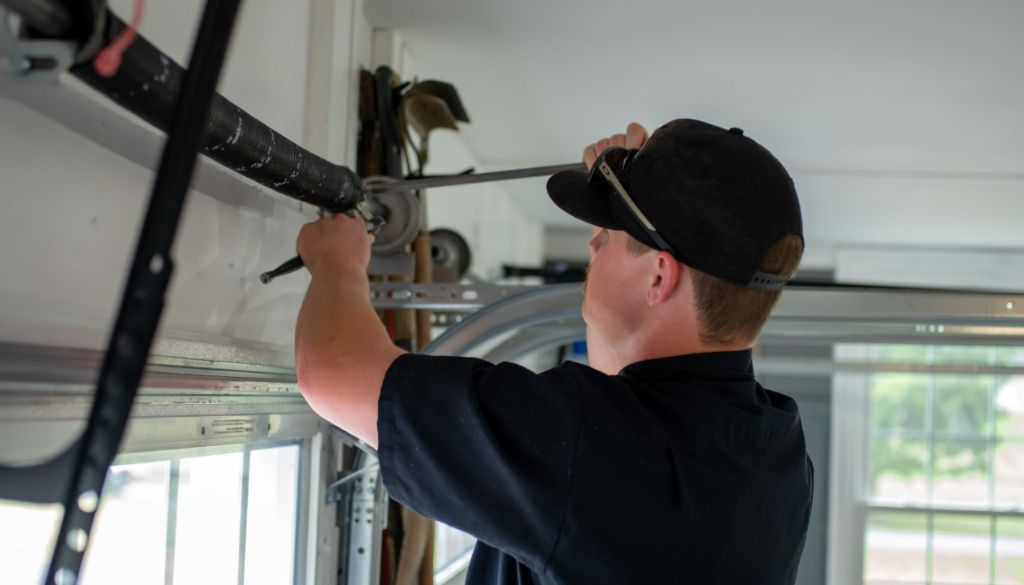
Torsion springs are mounted above the garage door opening. They work by twisting and unwinding. As the door closes, the torsion spring stores energy. As the door opens, the spring unwinds and releases that energy to help lift the door.
This design is commonly preferred for heavier or high-use doors because it provides controlled lifting force through the movement of the door. The spring does not simply pull upward like a stretched cord. It applies torque through the shaft and cable system, helping the door move evenly when the hardware is in good condition.
A well-functioning torsion spring system has a certain feel. When the opener starts, the door begins moving without a hard jerk. The bottom section rises evenly. The cables stay seated correctly. The rollers move through the tracks without scraping or hopping. Near the top of travel, the door does not surge upward or bang into position. On the way down, the door remains under control instead of dropping heavily.
That smoothness is the point of the entire counterbalance system. It is also why torsion spring issues often reveal themselves through movement rather than through the spring alone. A homeowner may never look above the door and notice the spring, but they will notice when the door suddenly feels heavy, crooked, noisy, or unpredictable.
Springs, cables, and tracks work as one system
Garage door springs often get the attention, but the cables and tracks are just as important to safe operation. The spring stores the energy. The cables transfer that lifting force to the door. The tracks guide the door so that force moves the panels along the intended path.
If a cable is loose, damaged, or not moving correctly, the door can lift unevenly. If a track is bent, dirty, or misaligned, rollers may bind. If rollers are worn or dry, the door can drag even when the spring tension is adequate. This is why a proper garage door inspection looks at the full system rather than treating the spring as an isolated part.
One common mistake is assuming that a door only needs more spring tension when it feels heavy or stalls. Sometimes the spring is not the only issue. The door may be dragging because the rollers need attention, the hinges are dry, or the tracks are obstructed. Adding force to overcome resistance is not the same as fixing the cause of the resistance. In mechanical systems, forcing a bind usually moves the failure somewhere else.
A good technician will watch how the door moves, listen for grinding or rattling, inspect visible hardware, and check the door’s balance. That broader view is especially important after garage door installation, after a panel replacement, or when homeowners add insulation or decorative hardware that changes the weight of the door. Any change in door weight can affect how the spring system performs.
What “garage door balance” really means
Garage door balance describes how well the spring system counteracts the door’s weight through its travel. A balanced door should not feel excessively heavy at the bottom, race upward at the top, or drift closed when it should remain controlled. Balance is not just a comfort issue. It affects safety, opener life, cable tension, roller wear, and overall reliability.
When a door is out of balance, the opener may become the first part to complain. The motor may strain, the rail may shake, or the door may reverse because it senses resistance. Homeowners sometimes interpret this as a garage door opener problem, and sometimes it is. But if the door itself is not balanced, the opener is being asked to compensate for a mechanical fault.
A balanced door also helps safety systems work as intended. Residential automatic garage door openers manufactured for the U.S. Market on or after January 1, 1991 are required to comply with UL 325 entrapment-protection requirements. Safety devices such as photoelectric sensors or reversing-edge systems are designed to reduce entrapment risk, but proper installation, use, and maintenance still matter. A door that is mechanically unstable or out of balance can create unsafe conditions that sensors alone should not be expected to solve.
This is why garage door safety begins with the door itself. Sensors, openers, and controls are important, but the physical door must move predictably. If the door is heavy, crooked, binding, or dropping, stop using it until the problem is inspected.
Signs a spring system may be failing
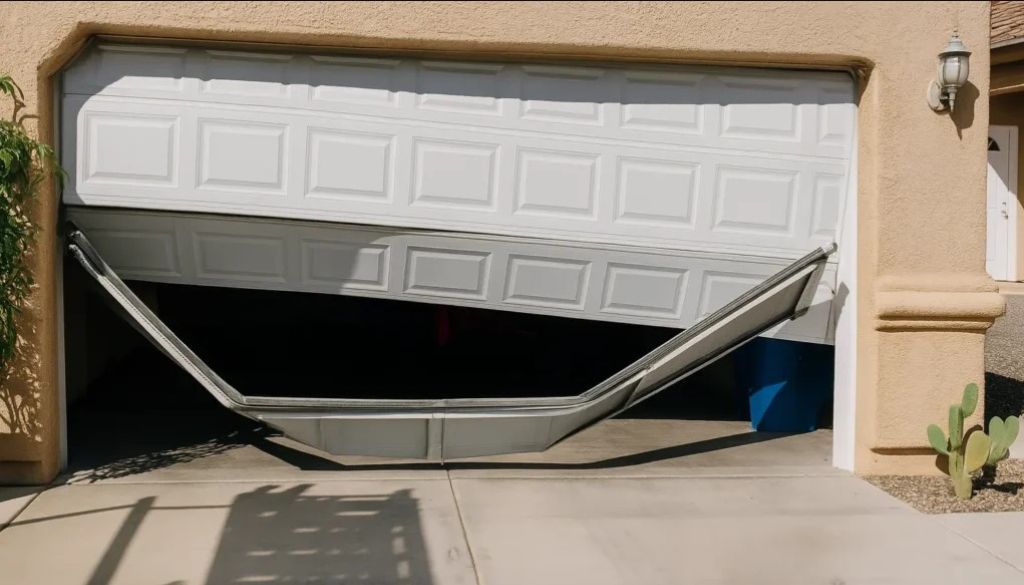
Spring problems do not always announce themselves with a loud noise. Sometimes they develop gradually as the spring loses effectiveness or as other components add resistance. A sudden failure is easier to recognize, but subtle symptoms deserve attention too.
Watch for these warning signs during normal use:
- The door feels unusually heavy when operated manually or seems too much for the opener to lift.
- The door opens a short distance, hesitates, or reverses without an obvious obstruction.
- One side of the door appears lower than the other during movement.
- Cables look loose, uneven, or out of place near the bottom brackets or drums.
- The door moves with new grinding, rattling, binding, or jerking sounds.
These symptoms do not prove that the spring alone is bad. They do mean the counterbalance system should be inspected. A noisy door may need garage door lubrication at the hinges, rollers, or springs. A jerking door may have roller or track issues. A heavy door may indicate a spring problem. The point is not to diagnose by guesswork, but to recognize when the system has changed.
A broken torsion spring is often visible above the door because the spring may show a separation in the coil. If that happens, do not operate the door. Do not try to lift it with the opener. The opener is not designed to replace the spring’s lifting force, and forcing the door can damage the opener, cables, panels, or tracks. More importantly, it can create a safety hazard.
Why spring problems happen
Garage door springs work every time the door opens and closes. They store and release energy repeatedly, and that repeated work eventually wears them. Usage matters. A door used several times a day will place more demand on the spring system than a door opened only occasionally. Heavier doors and high-use doors place special importance on a properly selected and installed spring system.
Wear is not the only factor. Lack of maintenance can increase friction throughout the door. Dirty tracks, dry rollers, neglected hinges, and poor lubrication can make the system work harder than necessary. The spring may still be doing its job, but it is doing that job against added resistance.
Changes to the door can also affect spring performance. A homeowner may replace a damaged section, add decorative hardware, or install insulation. Those changes may seem minor, but the spring system is designed around the door’s actual weight. If the weight changes enough, the balance can change too. After any substantial garage door replacement work or modification, balance should be checked.
Installation quality matters as well. Garage door installation is not just about hanging panels and connecting an opener. The springs, cables, tracks, rollers, and opener must all be compatible and correctly set up. UL emphasizes that certified products and qualified installation matter for automated door operators, and code officials should be consulted before installing automated door operators. That same respect for proper installation should extend to the door’s mechanical lifting system.
Why spring repair is not a casual DIY job
Some garage door maintenance tasks are suitable for careful homeowners. Spring repair is different. Springs store energy, and that energy can release suddenly if the wrong part is loosened, the wrong tool is used, or a component slips under tension. The danger is not theoretical. A torsion spring system sits above the door, connected to hardware that can move with force.
A homeowner can safely observe many things from a distance: whether a coil appears separated, whether the door is crooked, whether cables look slack, whether rollers are making noise, and whether the opener struggles. Observation is not the same as adjustment. Winding, unwinding, replacing, or resetting springs should be left to trained professionals with the correct tools and procedures.
The same caution applies to garage door cables. Cables may look simple, but they are part of the spring-loaded lifting system. A loose or frayed cable can indicate a serious balance issue. Trying to rewrap or tighten a cable without addressing spring tension can make the door unstable.
A good rule is simple: if the task involves spring tension, cable tension, or removing hardware that supports the door’s weight, it belongs in the professional category. The cost of getting it wrong is too high.
Maintenance that supports the spring system
Homeowners can do a great deal to help the spring system last and to catch problems early. The goal is not to adjust the spring. The goal is to reduce unnecessary friction, keep the door moving cleanly, and notice changes before they become failures.
A practical maintenance routine includes quiet observation. Stand inside the garage with the door closed, then run the opener and watch the full travel. Listen for squeaks, grinding, rattling, or scraping. Watch whether both sides of the door rise evenly. Look at the rollers as they pass through the tracks. Notice whether the opener strains at the start or near the top.
Cleaning matters too. Tracks guide the rollers and should be free of buildup that interferes with movement. That does not mean coating the tracks with lubricant. Tracks need to guide, not collect oily grime. Dirt and sticky residue can create more problems than they solve.
Lubrication should be applied to the right components. Hinges, rollers, and springs are common lubrication points. A silicone-based garage door lubrication garage door services product is commonly recommended for these parts. Avoid using WD-40 or other oil-based products as a general garage door lubricant because they can attract dirt. The wrong product may make the door seem better for a few days while leaving behind residue that gathers dust and grit.
A short maintenance check can be organized this way:
- Watch and listen to one full open-and-close cycle from inside the garage.
- Inspect visible rollers, hinges, cables, and tracks without touching tensioned parts.
- Clean debris from areas where it interferes with roller movement.
- Lubricate hinges, rollers, and springs with a suitable silicone-based lubricant.
- Test safety features and stop using the door if movement is uneven or uncontrolled.
This type of maintenance does not replace professional inspection. It gives homeowners a baseline. Once you know how your door normally sounds and moves, changes stand out sooner.
How springs affect the garage door opener
A garage door opener is often treated as the main machine in the system because it has the motor, remote, keypad, and wall control. Mechanically, the opener is more like a controlled assistant. It starts and stops movement, but it depends on the spring system to make the door movable.
When springs are weak, broken, or mismatched, the opener may strain. It may reverse because the door meets resistance. It may lift the door only partway. It may sound rougher than usual. Homeowners sometimes respond by adjusting opener settings or replacing remote batteries, but those actions will not fix a heavy door.
This matters for garage door troubleshooting. If an opener suddenly fails to lift a door that previously worked well, the door itself should be checked before assuming the opener is bad. A useful question is whether the door’s movement has changed. Did it become noisy first? Did it begin closing harder? Did one side lag? Did a cable look loose? These clues point back to mechanical balance.
Safety sensors also play a role, but a different one. Garage door sensors are intended to reverse the door if someone enters the closing path. They are part of entrapment protection, not a substitute for a balanced door. If a door reverses during closing, the cause may be a sensor issue, an obstruction, or mechanical resistance. The safest approach is to inspect the path, check that the sensors are properly positioned and unobstructed, and consider the door’s mechanical condition if the problem persists.
What a professional spring inspection should consider
A proper garage door inspection looks beyond the visible spring. The technician should consider the type of spring system, the condition of the cables, the door’s balance, the movement of the rollers, the state of the tracks, and the behavior of the opener. A door can have more than one problem at the same time, especially if it has been operated while out of balance.
For example, a homeowner may call because the opener will not lift the door. The spring may be broken, but the inspection might also reveal worn rollers and a cable that has not been tracking correctly. Replacing only the spring may restore lifting force, but ignoring the roller and cable issues could leave the door noisy, rough, or unreliable.
Professional judgment also matters when the door has been modified. If panels have been replaced, windows added, or insulation installed, the technician may need to confirm that the spring system still matches the door. Garage door replacement and major repair work should not leave the door merely operational. It should be balanced and predictable.
The homeowner’s role is to describe symptoms clearly. Instead of saying only “the opener is broken,” explain what changed. Mention whether the door became louder, whether it felt heavy, whether it reversed, whether the cables appeared loose, or whether the problem began after a repair or impact. Specific observations help narrow the diagnosis.
Safety considerations around spring-balanced doors
A garage door is the largest moving object in many homes. Garage door safety depends on mechanical condition, correct installation, safe use, and regular maintenance. The spring system is central because it controls how the door’s weight is managed.
Never stand under a door that is behaving unpredictably. Do not let children play with wall controls, remotes, sensors, or the emergency release. Do not assume that a partially open door will stay in place if the springs or cables are compromised. If a door appears crooked, drops suddenly, or makes a sharp change in movement, treat it as unsafe.
Automatic opener safety features deserve routine attention. U.S. Residential automatic garage door openers manufactured on or after January 1, 1991 must comply with UL 325 entrapment-protection requirements. CPSC safety guidance emphasizes that garage doors should have a sensor or electric eye that reverses the door if someone enters the closing path. These systems should be installed correctly and tested as part of normal maintenance.
Still, sensors cannot correct a broken spring or a door that is binding in the tracks. Think of safety systems as layers. The first layer is a mechanically sound, balanced door. The second is a properly installed opener with functional entrapment protection. The third is responsible use by the people in the home.
When spring issues point toward replacement
Not every spring problem means the entire door needs replacement. Many spring-related issues can be corrected with professional repair and maintenance. However, repeated spring or balance problems can reveal broader wear throughout the door system.
If the door panels are damaged, rollers are worn, tracks are compromised, cables show problems, and the opener is also struggling, it may be time to compare repair with garage door replacement. The question is not just whether the door can be made to move today. The better question is whether the system can be made safe, balanced, and reliable for long-term ownership.
Replacement can also become relevant when the door no longer fits the way the garage is used. A high-use door, a heavier door, or a door that has been repeatedly modified needs a spring system appropriate to that use. Since torsion springs are commonly preferred for heavier or high-use doors, spring type and door design should be discussed during any major installation or replacement planning.
A new door still requires maintenance. New hardware can settle, tracks can collect debris, rollers still need attention, and safety systems still need testing. Garage door installation is the beginning of ownership, not the end of care.
A homeowner’s best approach to spring systems
The most useful way to think about garage door springs is not as mysterious hardware, but as the balancing mechanism that makes the whole door practical. The springs allow a heavy door to move smoothly. The cables transfer force. The rollers and tracks guide travel. The opener controls movement. The sensors help protect the closing path. Each part depends on the others.
Homeowners do not need to perform spring adjustment to be responsible owners. They need to notice changes, maintain the accessible moving parts, use the correct lubricant, keep tracks clean, test safety systems, and call for professional garage door repair when symptoms point to balance or tension problems.
A quiet, balanced door is easy to take for granted. That is the point. Good spring systems do their work without drama. When the door starts to feel heavy, sound rough, move unevenly, or strain the opener, it is asking for attention. Listening early protects the door, the opener, and the people who use the garage every day.