
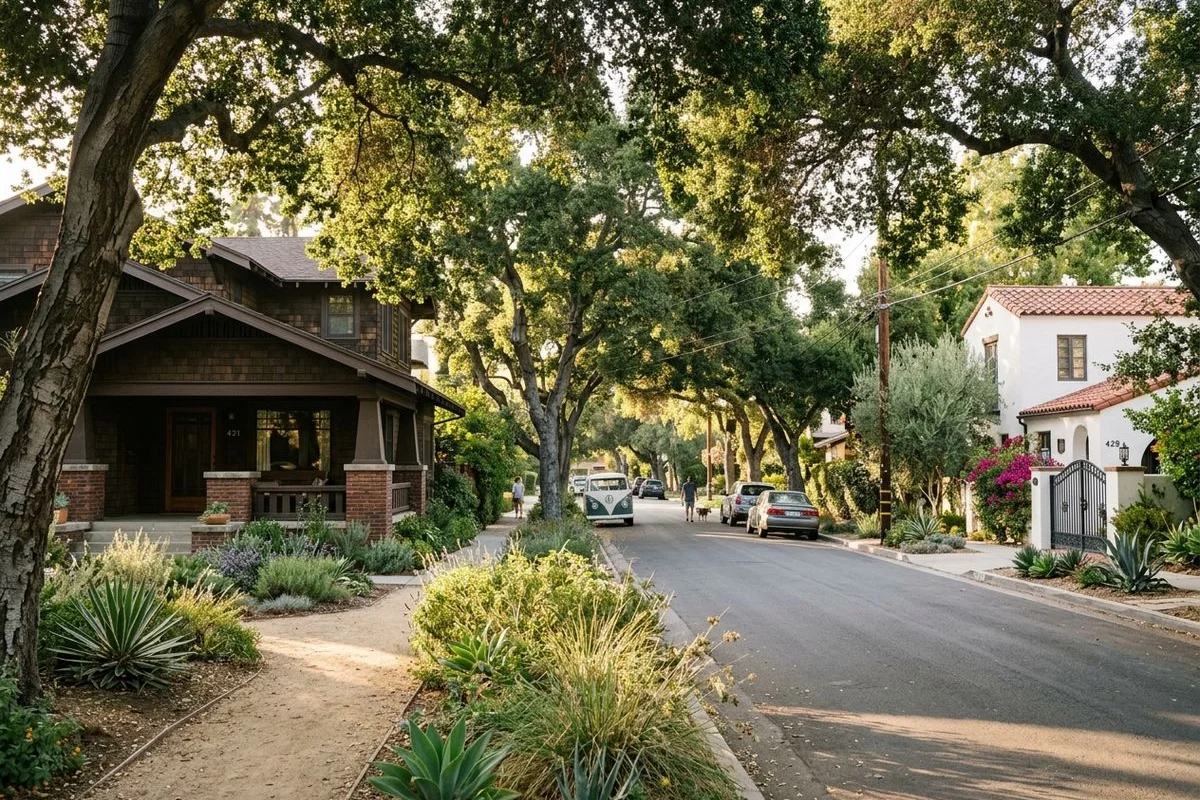
Erosion Control Planting for Sunny Hillside Yards
Sunny hillside yards look beautiful from a distance and can be surprisingly demanding up close. The slope that gives a property its character also pushes water downhill, dries soil quickly, and makes every planting choice matter a little more than it would on flat ground. In the San Gabriel Valley, that pressure is even more noticeable because hillsides sit in intense sun, with long dry stretches that test both irrigation systems and plant resilience. A well-planned hillside planting scheme does more than soften a slope. It helps hold soil in place, reduces runoff, supports water-wise landscaping, and gives the yard a finished look without turning it into a maintenance trap.
The best hillside work starts with restraint. A sunny slope does not usually need a complicated plant palette or a lot of decorative features. It needs the right plants in the right places, a clear understanding of how water moves, and enough structure to keep the slope from washing out during heavy watering or storms. That balance is where erosion control planting becomes less about decoration and more about landscape design with a practical backbone.
Why sunny hillsides need a different strategy
Flat yards and slopes behave differently, especially when irrigation and rain enter the picture. On a hillside, water tends to run off before it has much time to soak in. The steeper the grade, the faster the movement. That means soil particles loosen more easily, roots can be exposed, and bare patches can enlarge after each wash of water. A slope that looks stable in dry weather can reveal weak spots the first time irrigation is overdone or a storm arrives.
In the San Gabriel Valley, this matters for more than appearance. Hillside landscaping in this region has to account for drought tolerance, erosion control, and the visual character of the slope itself. That combination shapes every decision, from plant spacing to mulch choice. It also explains why the most successful yards are rarely the ones that rely on thirsty lawn or isolated shrubs set in open mulch. They usually have layered planting, efficient irrigation, and enough hardscape or grade control to break up the speed of water moving downhill.
The goal is not to cover every inch with plants. The goal is to interrupt erosion, slow water, and let the soil stay where it belongs. That is especially important on sunny slopes, where the ground can heat up quickly and dry out in a matter of hours. A plant that survives there needs more than toughness. It needs the ability to root deeply, spread effectively, or form a canopy that shades the soil.
Start with the site, not the plant list
One of the most useful pieces of guidance from California water planning is also one of the most overlooked: before removing turf or redesigning a landscape, assess the irrigation, soil, sun exposure, and plant selection. That sequence matters. On a hillside, it is easy to get excited about a plant palette and skip the groundwork. But the slope will expose weak planning fast.
Sun exposure tells you which plants can tolerate the heat load. Soil tells you how quickly water drains and whether amendments or structural changes are necessary. Irrigation tells you whether the system can deliver water evenly to a slope instead of letting the upper zone dry out while the lower zone gets saturated. Plant selection then becomes a response to those conditions, not a guess.
In practical terms, that means walking the slope at different times of day and noticing where heat lingers, where runoff gathers, and where water may already be cutting small channels. Those little channels are often the first sign that erosion control needs to be addressed before planting. If a slope is already moving soil, the planting plan alone will not solve it. Some combination of hardscaping, grade changes, or drainage control may be needed to slow water long enough for roots to do their work.
The role of water-wise plant selection
California’s water conservation guidance points landscapers toward region-appropriate plants and efficient irrigation, and that is especially relevant on sunny hillsides. In a place like the San Gabriel Valley, where drought tolerant landscaping is not just a design preference but a practical necessity, the plant palette should be chosen for both water use and slope performance.
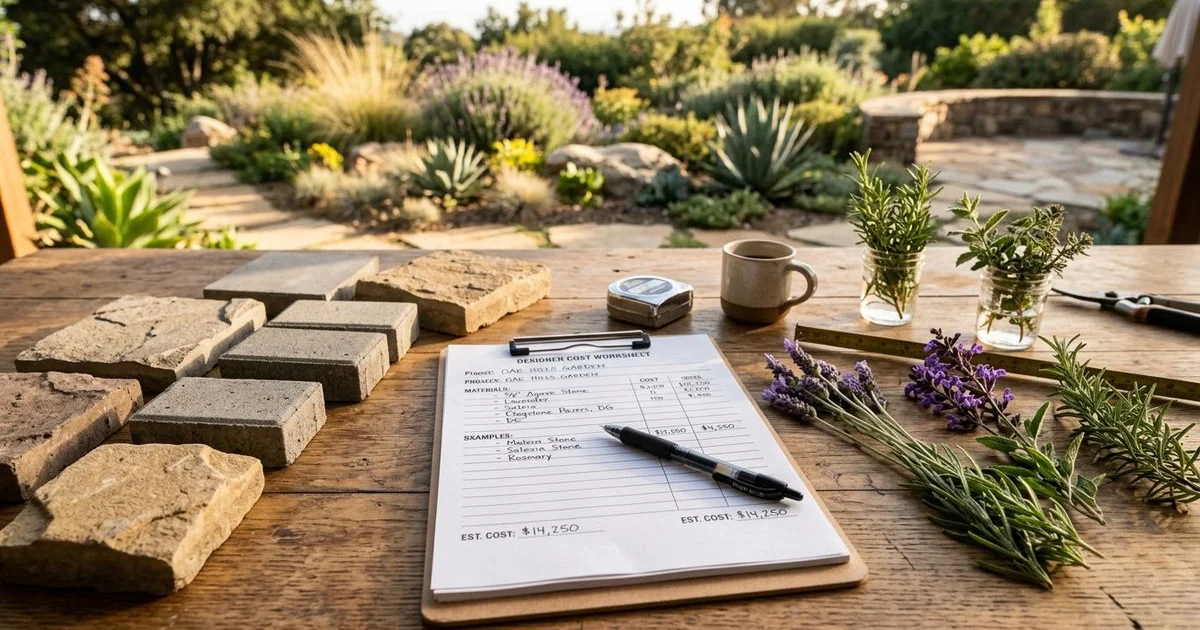
Native and climate-appropriate plants are often the strongest starting point because they are adapted to local conditions and can fit into water-efficient landscapes more naturally than high-demand ornamentals. The California Native Plant Society frequently highlights slope planting as a matter of drought tolerance, erosion control, and firewise planting. That combination reflects the real conditions many hillside properties face. A plant can be beautiful, but if it flops open, needs frequent watering, or leaves bare soil exposed, it is not doing the hillside any favors.
On sunny slopes, some of the most useful plants are those that root deeply, spread to fill space, or create low, interlocking forms that slow runoff. California buckwheat is a common example because it handles hot exposure and provides a dense enough presence to help stabilize planting areas. California sagebrush, manzanita, ceanothus, monkeyflower, foothill penstemon, and bunchgrasses also fit naturally into this kind of landscape when placed correctly. San Gabriel oak, as a locally named native species, speaks to the same broader idea, local plants often belong in local slopes because they are part of the climate story the yard is already living in.
This does not mean every slope should be planted only with natives. It means the core structure should be built around plants with a proven ability to tolerate sun, conserve water, and contribute to soil stability. That is especially important in drought sensitive regions, where water-efficient landscapes also need to satisfy local water usage requirements for new and renovated landscapes under California’s Model Water Efficient Landscape Ordinance. The practical lesson is simple, choose plants with their mature size, water demand, and slope behavior in mind, not just their appearance in a nursery container.
How planting controls erosion
Plant roots are the real workhorses on a hillside. Above ground, they shade soil and reduce the impact of sun and wind. Below ground, they knit the soil together and help hold it in place. The most effective erosion control planting uses a mix of root behaviors rather than one uniform type of plant. Low, spreading forms stabilize surface soil. Shrubby plants add structure and anchor deeper layers. Clumping grasses can hold the middle ground between those two functions.
A healthy planting scheme also leaves less exposed bare soil, which matters more than many homeowners expect. Bare soil on a sunny slope can crust over, break apart, and wash downhill more easily than soil shaded by foliage or protected by mulch. Even a relatively small strip of unplanted ground can become a drainage path if irrigation lands there every few days.
Spacing is another place where judgment matters. Planting too sparsely leaves the hillside open to erosion for too long. Planting too densely can create competition for moisture, especially if the irrigation system is not designed for slope conditions. The right spacing depends on mature growth, not on how full the bed looks on planting day. That patience can feel uncomfortable at first, but hillside landscaping rewards it later when the plants have filled in and the slope no longer looks patchy.
Irrigation on a slope deserves its own plan
A hillside can make even a decent irrigation system behave badly if it was designed for a flat yard. Water wants to move downhill, which means the upper portion of the slope often dries out first while the lower portion collects more moisture. That unevenness can cause stressed plants at the top and oversaturated roots at the bottom. Both outcomes undermine erosion control.
This is why irrigation retrofits are so often part of successful hillside landscaping. Efficient irrigation is not just about conserving water, it is about delivering it with enough precision that the slope can absorb what it receives. In many cases, drip irrigation or other low-volume delivery methods are better suited to hillside planting than broad spray coverage. The point is to keep the water where roots can use it and prevent runoff before it starts.
Timing matters too. Shorter watering cycles can be more effective on slopes than long, heavy applications, because the soil has a better chance to absorb moisture before it starts running downhill. If a slope has been irrigated by habit for years, the shift to a smarter system may feel subtle at first, but the improvement in plant health and runoff control can be substantial.
This is also where turf removal becomes part of the conversation. On many sunny hillsides, turf simply uses more water than it is worth and offers less erosion benefit than a layered planting of native or climate-appropriate plants. California water guidance encourages homeowners to assess the site before removing turf, which is the right order of operations. If grass is being replaced, the new design should be built to do more than save water. It should stabilize the slope, respect the sun exposure, and reduce maintenance over time.
Hardscape has a supporting role, not a leading one
Hardscaping can make a hillside more usable, but it should be used with care. A slope that is overbuilt with walls, steps, or paving can feel rigid and may still fail to address runoff if water has nowhere to go. On the other hand, a little structure can make planting more effective by slowing water, creating manageable terraces, and giving the eye a place to rest.
In landscape design for slopes, hardscaping often works best as support for planting rather than as a replacement for it. A low retaining feature, a set of strategically placed steps, or a narrow landing can help divide the hillside into sections that are easier to irrigate and maintain. These elements also help organize the planting zones so that the driest, hottest spots get the toughest plants and the slightly sheltered areas can support a wider mix.
The visual effect matters, especially in the San Gabriel Valley, where hillside landscapes are part of the local character. A well-composed slope should look intentional from the street and comfortable from the yard. The hardscape should not dominate. It should frame the planting and help the plants do their job.
Firewise choices belong in the plan from the beginning
Sunny hillside yards in chaparral-adjacent areas call for more than erosion control and drought tolerance. They also need firewise thinking. The CNPS San Gabriel Mountains chapter highlights ember-resistant zone rules and native plants suitable for local gardens, which reflects a simple truth, hillside planting should support both safety and resilience.
Firewise landscaping does not mean stripping a slope bare. It means avoiding arrangements that create unnecessary fuel near the home, choosing plants that fit the local climate, and maintaining clear, thoughtful spacing. Native plants can absolutely be part of a fire-conscious design when they are selected and maintained properly. The same is true for drought tolerant landscaping more broadly. Water-efficient does not automatically mean firewise, and firewise does not automatically mean water-efficient, but a good hillside plan should aim to serve both goals where possible.
The trade-off is that maintenance matters more than labels. A well-chosen native shrub can become a liability if it is neglected, crowded, or planted too close to vulnerable structures. Likewise, a safe, attractive slope depends on pruning, irrigation management, and keeping the planting palette disciplined. The strongest hillside landscapes are not the most crowded ones. They are the ones with enough order to stay healthy.
Native habitat gardening can also make the yard feel alive
There is a common misconception that erosion control planting has to look rough or purely utilitarian. That has not been my experience. The best hillside gardens often feel the most alive because they are built around native habitat gardening principles. Birds move through them. Pollinators find them. Seasonal changes are visible in the way foliage shifts, blooms appear, and seed heads remain attractive after flowering.
Plants such as ceanothus, monkeyflower, foothill penstemon, and bunchgrasses can create that kind of layered interest without demanding heavy irrigation. California sagebrush adds texture and aroma. California buckwheat provides structure and resilience. Used together, they build a slope that feels rooted in place rather than imposed on it.
That sense of belonging matters on a hillside. A slope is not a blank canvas. It is a living system that already has gravity, heat, and drainage working on it every day. When the planting responds to those forces instead of fighting them, the yard tends to settle into itself more gracefully.
HOA rules and water-wise landscapes
Many homeowners in the San Gabriel Valley live with HOA oversight, and that can complicate landscape choices if the association prefers a traditional look. California water restriction guidance makes one point clear: homeowners’ associations cannot prohibit certain water-efficient landscaping choices during drought-related restrictions. That matters because water-wise design should not be blocked by outdated assumptions about what a front yard or hillside should look like.
Still, practical collaboration is usually better than confrontation. A hillside landscape that looks finished, tidy, and intentionally designed is easier to defend than a slope that looks unfinished. Clean edges, considered hardscaping, and coherent plant grouping help a drought tolerant landscape feel polished rather than improvised. That can make a big difference when a homeowner is trying to satisfy both performance and appearance expectations.
What a successful hillside planting often feels like over time
The first season is usually the most uncertain. Plants look small, bare soil seems too visible, and a slope can feel more exposed than the homeowner expected. By the second season, the plants begin to knit together if the site was assessed properly and the irrigation has been dialed in. By the third, the difference is hard to miss. Runoff is calmer, soil stays put more reliably, and the hillside begins to read as a unified landscape instead of a problem area.
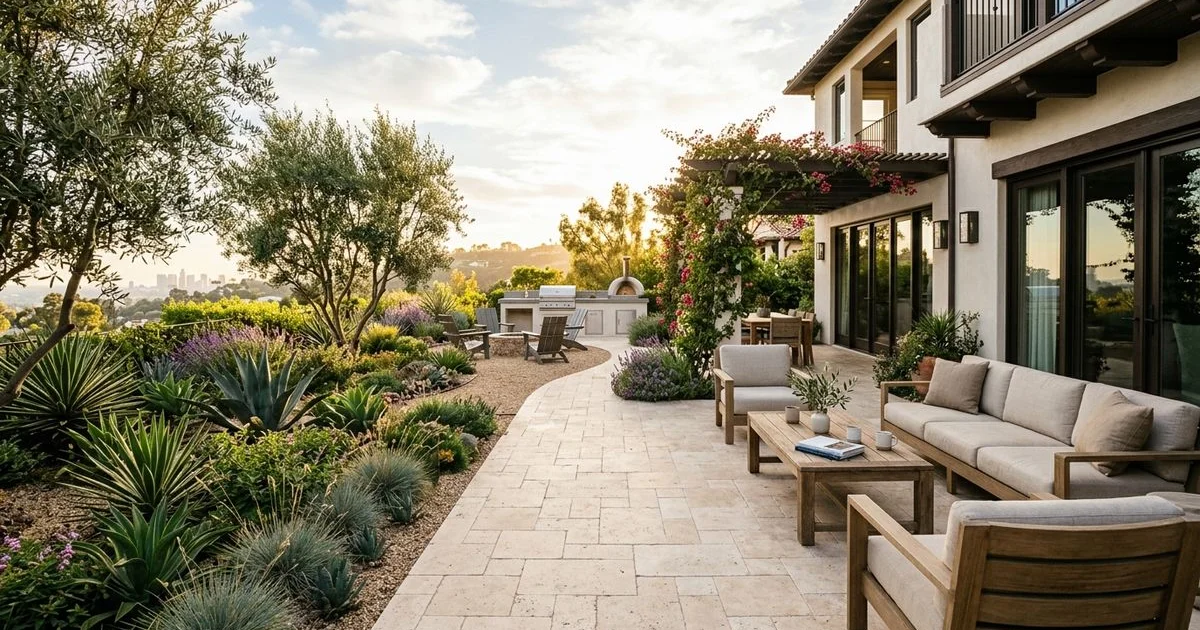
That gradual transformation is the real payoff. Erosion control planting for sunny hillside yards is not about instant fullness. It is about creating a durable plant community that manages water intelligently, fits the local climate, and contributes to the broader look and function of the property. In a place where hillside landscaping has to account for sun, slope, drought, and fire risk, that kind of design is not a luxury. It is the most practical way outdoor entertainment spaces to build a landscape that lasts.