
A Practical Guide to Irrigation Efficiency in Landscape Upgrades
A landscape upgrade can look simple from the street, but the water side of the project is where the real performance is decided. A well-designed yard in the San Gabriel Valley or a similar Southern California setting should do more than replace tired turf with something prettier. It should use water responsibly, fit the site’s sun and soil conditions, hold up on slopes, and support the long-term shape of the property without constant correction.
That is why irrigation efficiency deserves the same attention as hardscaping, plant color, or curb appeal. The most successful projects I have seen start with a practical question: how does this landscape actually use water, and how can the design reduce waste without making the space feel stripped down or fragile? Once you begin looking at a yard that way, the work changes. Turf removal becomes part of a larger system. Plant choice becomes a water strategy. Even a retaining wall or decomposed granite path can influence how irrigation is laid out and where runoff ends up.
In California, this is not just a matter of preference. Water-efficient landscaping is built into the conversation around new and renovated landscapes, and the state’s model guidance points designers and property owners toward native and climate-appropriate plants, alternative water sources where appropriate, and efficient irrigation. That is especially relevant in places where hillside landscaping, defensible-space planning, and drought resistant landscaping all overlap.
Start with the site, not the plant list
The most common mistake in landscape upgrades is jumping straight to a plant palette. A homeowner falls in love with a look, a contractor sketches a few shrubs, and the irrigation gets adjusted later to fit the design. That sequence usually creates problems. Efficient irrigation begins with the site itself.
Before turf is removed or a new planting plan is finalized, the practical questions are basic but important: how much sun does each area receive, how quickly does the soil absorb water, which zones dry out first, and where does water move during a heavy irrigation cycle or a storm? California water guidance emphasizes exactly this kind of assessment, because irrigation efficiency depends on matching plant needs to the site’s conditions rather than trying to make one watering schedule serve every corner of the yard.
I have seen plenty of landscapes where the front entry stays damp while a side slope dries out in a day. That is not a plant problem alone. It is a grading issue, a zoning issue, and often a controller issue. If the upgrade begins with an honest site review, the rest of the project gets easier. You can separate deep-rooted shrubs from shallow-rooted accents, isolate hot exposures from shaded pockets, and avoid overwatering areas that need very little.
On many San Gabriel Valley properties, microclimates are sharper than people expect. A west-facing slope may bake through the afternoon while a courtyard near the house stays protected. A narrow side yard may get reflected heat from walls and paving, while an open back area receives wind. Good irrigation design respects those differences instead of flattening them.
Turf removal only works when irrigation is redesigned with it
Turf removal is often the first visible step in a water-wise landscape upgrade, but turf does not disappear without consequence. It changes demand, coverage, and the structure of the irrigation system. A lawn typically needs a different watering pattern from shrubs, perennials, native habitat plantings, or mixed hardscaping. Once the lawn is gone, the old spray layout may no longer make sense.
That is where many upgrades lose efficiency. Heads are left in place where they no longer belong. Sprays overshoot onto hardscaping. Drip lines are added casually without considering pressure, spacing, or groupings. The result is a landscape that technically uses less turf but still wastes water through poor distribution.
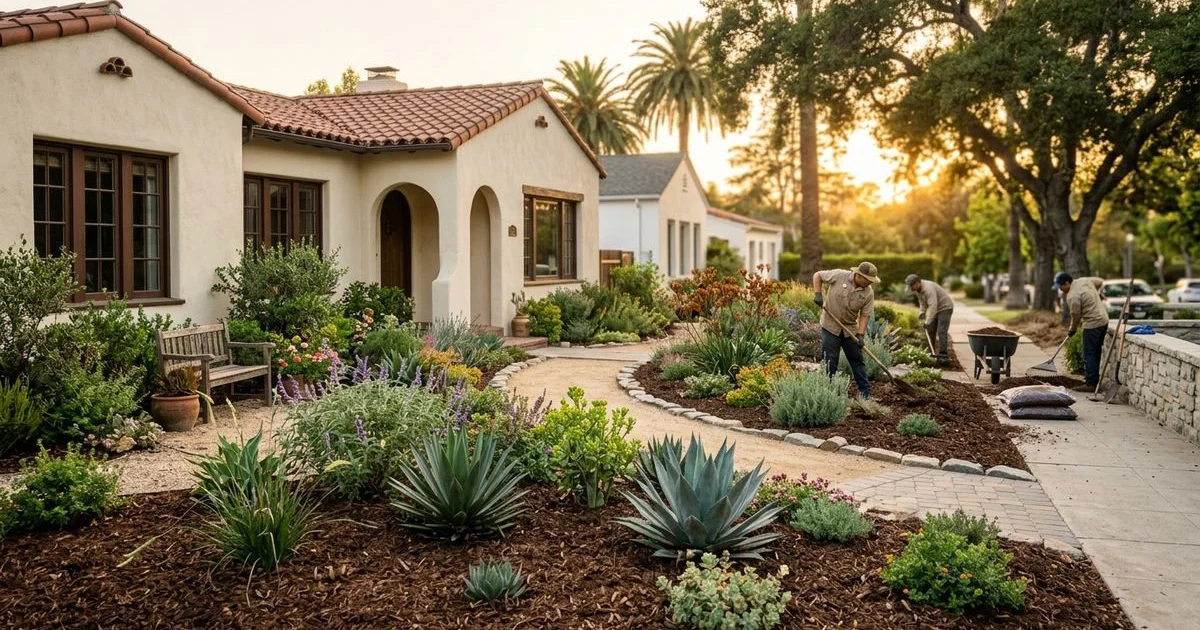
A better approach is to treat turf removal and irrigation retrofit as one project. If a front lawn becomes drought resistant landscaping, the former sprinkler zones may need to be broken into smaller, more precise areas. A planting bed with California native plants may need drip irrigation or another low-volume method, while a hardscaping edge should be kept dry. The design should be intentional enough that every gallon has a reason to be where it is.
This is also where the visual goals and the water goals meet. In the San Gabriel Valley, a landscape often has to look balanced from the street while still respecting conservation realities. Water-wise upgrades do not need to look sparse or temporary. They can be layered with boulders, decomposed granite, seating areas, low shrubs, and habitat-focused planting. The trick is to make the irrigation follow the design instead of forcing the design to follow an outdated watering pattern.
Efficient irrigation depends on matching zones to plant water needs
One of the most useful resources in California landscape planning is the idea that plant water needs should be grouped by region and exposure. That may sound obvious, but it is often ignored in actual installation work. A landscape with similar plants mixed across widely different conditions rarely waters efficiently.
A practical zone plan usually separates high-water areas from low-water areas, then narrows things further by sun exposure and plant type. Native and climate-appropriate plants often belong in their own irrigation zones because their needs are generally lower and more predictable once established. The same is true for compact shrub beds versus broader mixed areas. A single valve controlling everything usually invites compromise, and compromise in irrigation often means excess water.
This is especially important in drought resistant landscaping, where plant selection and watering strategy need to reinforce each other. A ceanothus or California buckwheat should not be asked to live on the same schedule as a thirstier ornamental planting. Manzanita, monkeyflower, foothill penstemon, bunchgrasses, California sagebrush, and other regionally appropriate plants can be grouped thoughtfully, but only if the irrigation layout supports their actual needs. WUCOLS is useful here because it helps frame water needs by region and plant type rather than by guesswork.
In practice, efficient zoning is less glamorous than plant shopping, but it pays off every season. It reduces overwatering, lowers runoff, and makes seasonal adjustments simpler. It also gives the landscape a better chance to mature without constant correction from the hose or manual overrides.
Hillside landscaping asks for a different level of discipline
Hillside properties bring a different set of issues. Water moves downhill. That sounds obvious until you watch irrigation water run off a slope before it has time to soak in. On inclined sites, inefficient watering is not just wasteful, it can contribute to erosion and create patchy plant establishment.
Hillside landscaping in the San Gabriel Valley has to balance erosion control, drought tolerance, and firewise planting. Those priorities are connected. A slope planted too densely with the wrong material can create maintenance problems. A slope watered too aggressively can shed water instead of absorbing it. A slope left bare because the owner is nervous about maintenance can erode during storms.
The most effective hillside upgrades I have seen use a combination of low-water planting, careful irrigation distribution, and structural support where needed. Water is applied slowly enough for infiltration. Plant spacing respects root establishment and access. Hardscaping may be used to interrupt runoff or create usable terraces. The best solutions do not fight the grade. They work with it.
There is also a visual issue unique to this area. The San Gabriel Valley’s hillside character matters. New construction and landscape renovations have to look appropriate to the setting, which means water-efficient planting and good grading often have to coexist with a clean, finished appearance. That balance is not always easy, but it is achievable when the irrigation plan is drawn with the slope in mind from the beginning.
Hardscaping can help efficiency, but only if it is placed wisely
Hardscaping is often treated as separate from irrigation, but in a water-conscious landscape they are closely linked. Patios, paths, retaining walls, seat walls, and other hard surfaces reduce planted area, which can lower irrigation demand. They can also direct foot traffic away from fragile planting zones and create better access for maintenance. Used well, hardscaping can support irrigation efficiency by shrinking the area that needs active watering.
The downside is that hard surfaces can also create runoff or reflect heat into planting beds if they are overused or poorly placed. A long expanse of paving beside thirsty plantings can create a hot, drying edge that drives up irrigation needs. A poorly graded patio can send water where it is not wanted. So the goal is not simply to add more hardscape. It is to position it with a clear understanding of drainage, shade, and the planting strategy around it.
transform your backyardIn a landscape upgrade, hardscaping can be the quiet ally of efficient irrigation. A well-placed path can separate irrigation zones. A retaining wall can help slow hillside runoff. A seating area can replace water-hungry lawn where people actually want to spend time. These are design decisions, but they are also irrigation decisions, because they determine how much planted area remains and how that area behaves in heat and wind.
Firewise planting and water efficiency can work together
It is a mistake to assume that firewise landscaping and water-efficient landscaping are at odds. In many San Gabriel Valley settings, they overlap naturally. California native plants and other climate-appropriate species can be part of a landscape that manages water wisely and still supports defensible-space planning.
The key is thoughtful placement and maintenance. Firewise planting focuses on ember-resistant zones, plant spacing, and the removal of unnecessary fuel near structures. Water efficiency focuses on the right plant in the right place with the right amount of irrigation. If a plant is well matched to the site, it is more likely to stay healthy without excess watering, and healthier plants often perform better in both landscape and fire planning.
The San Gabriel Mountains area is home to many rare, threatened, and endangered species, which is one reason native habitat gardening matters here. A landscape does not have to become a wild recreation of chaparral to be ecologically thoughtful. It can use regionally appropriate plants such as California buckwheat, California sagebrush, ceanothus, manzanita, monkeyflower, foothill penstemon, bunchgrasses, and locally named native species like San Gabriel oak in a way that supports both the site and the surrounding character of the region.
That said, firewise planting is not a decorative add-on. It requires discipline. Overcrowding plants or overwatering them to make them look lush can undermine both fire and water goals. The landscape should be maintained as a living system, not a static picture.
Microclimate matters more than most people expect
A planting bed can look uniform from the sidewalk and still contain several watering environments. The north side of a house may hold moisture longer. A slope exposed to afternoon sun and reflected heat may dry out fast. A section tucked behind a wall may need less irrigation than the front yard just a few feet away. When people say their irrigation is inefficient, they are often describing a microclimate mismatch.
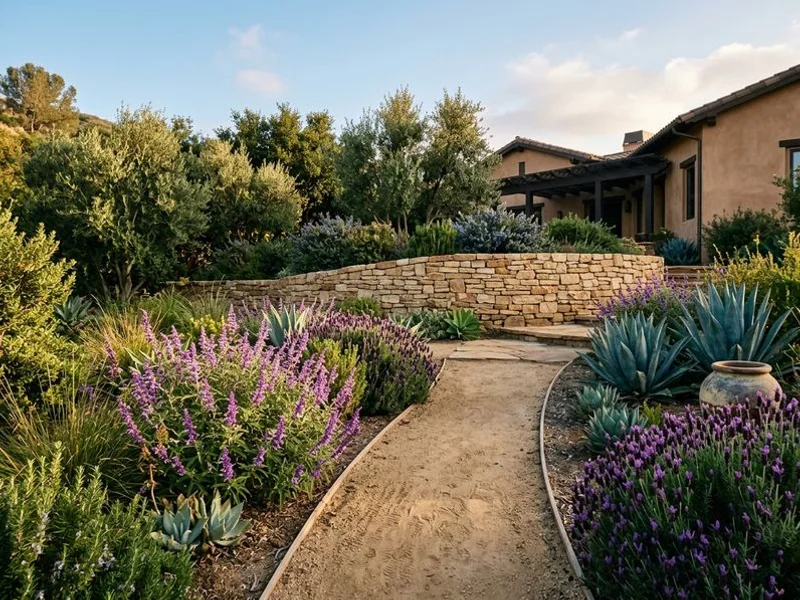
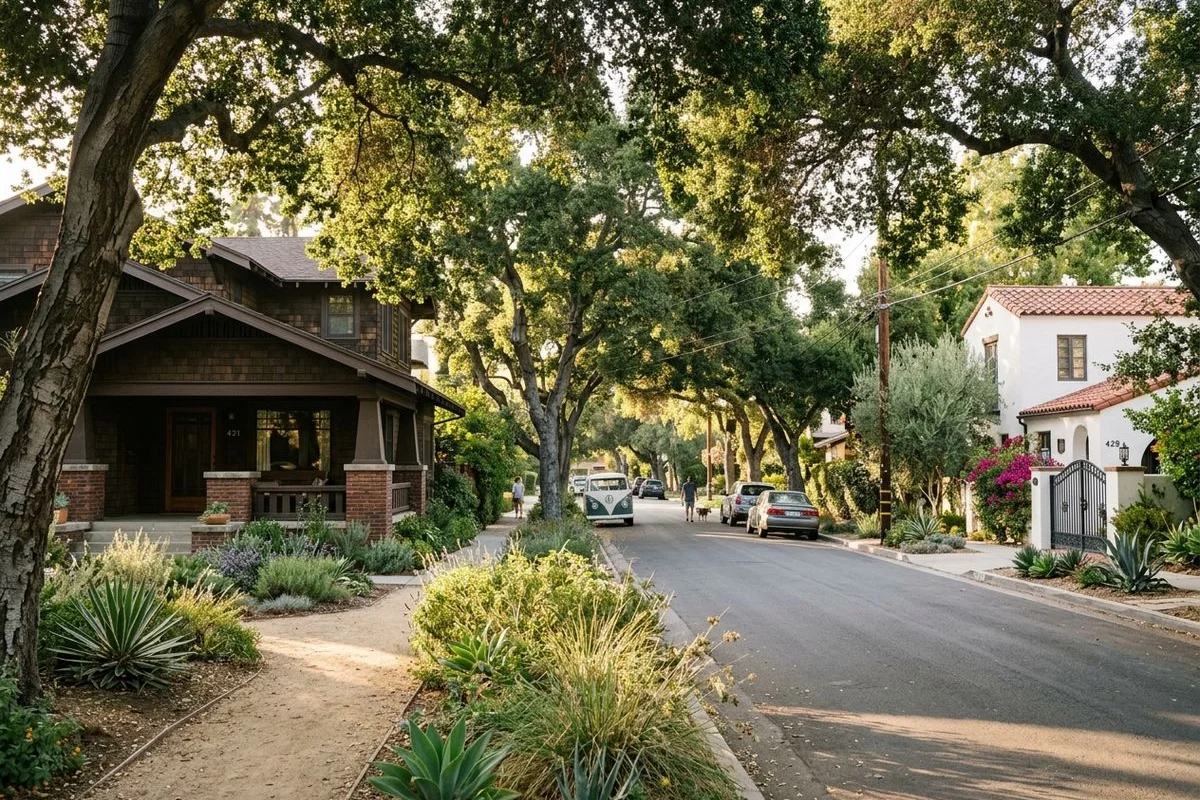
This is why plant selection by microclimate is such a useful concept in landscape upgrades. Even drought-tolerant plants have limits during establishment and seasonal stress. A plant that performs beautifully in one exposure may struggle in another if the irrigation schedule is built around the wrong assumptions. In practical terms, that means planning should account for sun exposure, wind, reflected heat, and the way each area sheds or retains moisture.
A well-designed landscape often has several water personalities. The entry planting might be light and low-water. The side slope might be a native plant matrix with slow irrigation. The rear entertaining area might use more hardscaping and fewer plant beds. The point is not to make every square foot identical. It is to respect what each square foot actually does.
HOA rules do not erase water-wise choices
Homeowners’ association rules can complicate landscape upgrades, especially when drought restrictions are in play. California guidance makes it clear that homeowners’ associations cannot prohibit certain water-efficient landscaping choices during drought-related restrictions. That matters for anyone trying to replace turf, install climate-appropriate plants, or shift to a more efficient irrigation layout.
Still, an HOA does not make the process simple. Appearance standards, front yard visibility, and neighborhood expectations can shape how the project is presented. In that setting, a well-planned design is worth more than a verbal explanation. Clean edges, thoughtful hardscaping, and disciplined plant selection help water-wise landscapes look intentional rather than improvised.
The best projects manage both pressures at once. They meet conservation goals without making the property feel neglected. They respect community standards while avoiding the old habit of treating water use as an afterthought.
A practical sequence for getting irrigation efficiency right
The most successful landscape upgrades usually follow a disciplined order, even if the finished yard looks effortless. First, assess the site. Look at soil, sun, slope, runoff, and existing irrigation performance. Second, decide what the landscape is supposed to do, whether that means reducing turf, improving curb appeal, creating usable outdoor space, or stabilizing a hillside. Third, choose plants that fit the actual conditions, not just the visual theme. Fourth, design the irrigation around those plant groupings and microclimates. Fifth, use hardscaping and grading to support drainage and reduce needless watering.
That sequence keeps the project grounded. It also prevents the common problem of overbuilding irrigation around a plant list that was never matched to the site in the first place. When the irrigation design follows the landscape logic, maintenance gets simpler, water use becomes more predictable, and the yard has a better chance of aging well.
A short practical check can help before any major upgrade begins:
- Review soil, sun exposure, slope, and drainage patterns before removing turf.
- Group plants by water need and exposure, then assign irrigation zones to match.
- Treat hillside areas as erosion control zones, not just planting beds.
- Use hardscaping to reduce watering demand where people actually need usable space.
- Favor native and climate-appropriate plants that fit the region and the microclimate.
What efficiency looks like a year after the work is done
The real test of irrigation efficiency is not the day the installation is finished. It is the next dry season, and the one after that. A good landscape upgrade should become less dependent on constant intervention as it establishes. Plants should begin to settle into their assigned zones. Runoff should decline. The system should be easier to adjust because the zones make sense. The yard should look coherent without trying to force every plant and every hardscape element to perform the same way.
That is the practical standard. Efficient irrigation is not about squeezing every landscape into a rigid formula. It is about building a system that suits the property, the region, and the plants you actually want to keep alive. In the San Gabriel Valley, where drought resistant landscaping, hillside conditions, and local fire and conservation realities all intersect, that kind of discipline is not optional. It is the difference between a landscape that merely looks upgraded and one that truly works.