Garage Door Installation Safety Tips for Confined Work Areas
Garage door installation can look straightforward from the driveway. A door, tracks, rollers, springs, opener, sensors, a few brackets, and enough hardware to fill a coffee can. Inside the garage, especially a tight one, the job becomes much less forgiving. Ceiling height is limited. Vehicles, storage racks, bicycles, water heaters, and laundry equipment crowd the work zone. The installer often works overhead, reaches around corners, and moves heavy parts through narrow gaps while trying not to damage walls, wiring, or the new door.
That is where safety planning matters most. Confined work areas magnify every mistake. A tool dropped from a ladder has fewer places to fall safely. A section panel leaned against a wall can slide into a person, a car, or a glass window. A garage door opener rail that would be easy to align in an empty bay becomes awkward when the ceiling is low and the ladder cannot sit where it should. Even basic garage door maintenance tasks, such as garage door lubrication or garage door inspection, deserve more care when the space is cramped.
The biggest lesson from field work is simple: a garage door system should never be treated as a collection of separate parts. The door, garage door springs, garage door cables, garage door rollers, garage door tracks, opener, and garage door sensors all interact. If one part is installed poorly, adjusted carelessly, or tested incompletely, the entire system can become unsafe. That concern is not theoretical. Residential automatic garage door openers are subject to a mandatory federal safety standard in the United States, and they must include entrapment protection such as photoelectric sensors or an equivalent safety system. Non-reversing openers have long been recognized as a serious hazard.
A safe installation in a confined area starts before the first bracket goes up.
The confined garage changes the risk profile
A spacious two-car garage gives an installer room to stage door sections, set up ladders, lay out tracks, and check the opener arm without stepping over hardware. A confined garage removes those conveniences. The installer may have to turn sideways to carry a panel, work with one shoulder against shelving, or position a ladder at a less comfortable angle. Overhead work becomes more tiring, and fatigue leads to shortcuts.
Awkward posture is one of the most underestimated hazards in garage door installation. Reaching above shoulder height while holding a track, opener rail, or tool puts strain on the arms and back. When the body is twisted because a vehicle, wall, or storage cabinet blocks the ideal stance, control decreases. That matters when handling parts that need accurate alignment, such as garage door tracks or opener hardware. A small slip during installation can create a large problem later, including poor travel, roller binding, noisy operation, or premature wear.
Cramped spaces also make communication harder. If two people are lifting a section or setting a track, one may not be able to see the other’s hands. A simple instruction like “hold it there” can be misunderstood when the worker on the other side is blocked by the door opening or a stack of boxes. On garage door replacement jobs, old components may be in the way while new components are being staged, adding another layer of clutter.
The safest crews slow down at the beginning. They clear just enough space to work correctly, not just enough space to squeeze through. That distinction prevents many injuries and callbacks.
Clear the work zone before touching the door
A confined garage rarely becomes spacious, but it can become orderly. Before beginning garage door installation, remove or relocate anything that could interfere with movement, ladder placement, or emergency exit. This includes sports equipment, storage bins, garden tools, extension cords, and loose items along the walls near the tracks. If a vehicle cannot be moved out of the garage, the job may need to be rescheduled or approached in stages. Working over a car is not just inconvenient. It encourages poor ladder placement and creates pressure to rush.
The floor deserves particular attention. Garage door work involves hardware at ankle height and overhead at the same time. If the installer has to watch every step because screws, brackets, cords, and packaging are scattered on the slab, attention is pulled away from the door. In a tight garage, that distraction matters. A clean floor is a safety control, not a housekeeping preference.
Lighting should be addressed early as well. Many garages have a single ceiling fixture, often positioned exactly where the opener rail or motor head will go. Shadows hide trip hazards and make it harder to see whether garage door sensors are aligned. Portable lighting helps, but cords must be placed where they will not snag feet, ladders, rollers, or cables. Battery lighting can be useful in tight work areas because it reduces cord clutter, but the fixture still needs to be stable and out of the travel path.
For a confined installation, the work zone should be treated almost like a small construction site. Materials come in only when needed. Old parts leave as soon as practical. Tools return to a known location. That rhythm feels slower for the first twenty minutes, then saves time through the rest of the job.
A compact pre-installation safety check
Use a short, disciplined check before starting. It should be simple enough that it actually happens on busy days.
- Confirm that the garage floor, ladder positions, and door opening are clear of stored items, cords, and loose hardware.
- Identify pinch points around tracks, rollers, hinges, cables, and the opener arm before lifting or fastening parts.
- Verify that the opener model includes required entrapment protection, such as photoelectric garage door sensors or an equivalent safety system.
- Plan how door sections, tracks, and opener components will move through the confined space without twisting or overhead carrying.
- Keep children, pets, and unnecessary bystanders out of the garage until installation, adjustment, and safety testing are complete.
That last point deserves emphasis. Automatic garage doors are powerful moving systems. Children should be taught garage door safety, and remotes should be kept out of their reach. During installation, the rule should be even stricter: no one enters the work zone unless they are part of the job.
Ladders, ceiling work, and the problem of “almost reachable”
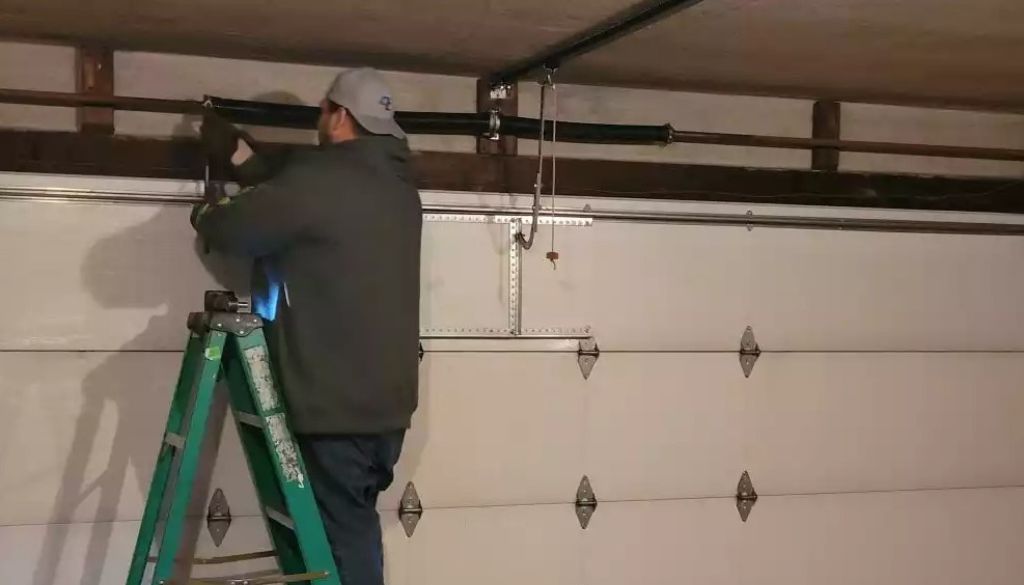
Many garage door tasks happen at ceiling height. Opener mounting, track support, sensor wiring routes, spring area access, and final travel checks all involve overhead work. In a confined garage, the ladder often cannot be placed in the ideal spot. That creates a temptation to stretch.
“Almost reachable” is a warning sign. If the installer has to lean past the ladder rails, twist at the waist, or hold a part with fingertips while driving a fastener, the setup is wrong. The correct answer may be to move storage, reposition the ladder, bring in a second person, or break the task into smaller steps. The wrong answer is to make one long reach and hope it works.
Overhead work also affects judgment. Arms fatigue quickly when held above the shoulders. After several minutes, even experienced installers lose fine control. In confined spaces, it helps to alternate tasks. Fasten a bracket, step down, check alignment from the floor, prepare the next part, then go back up. This rhythm reduces fatigue and gives the installer a better view of the whole system.
Garage door tracks are a good example. They need to be positioned so the rollers travel smoothly, but the installer working inches from the ceiling may not see the broader alignment. Stepping back from the door opening, even in a cramped garage, often reveals a problem that was invisible from the ladder. Track alignment affects operation, noise, and wear. It also affects garage door troubleshooting later, because a door that binds may be misdiagnosed as an opener problem when the real issue began with installation.
Treat springs and cables with professional respect
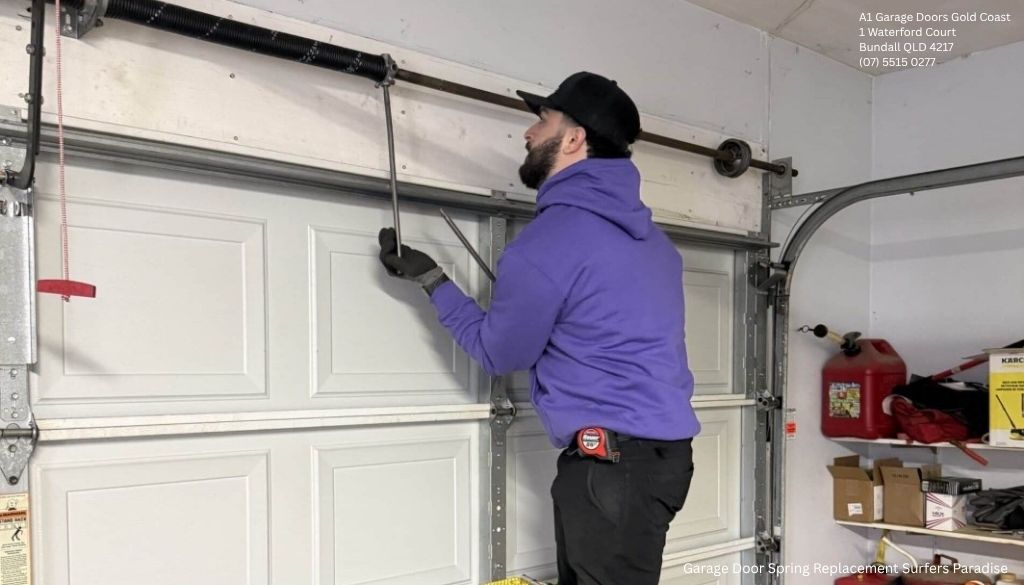
Garage door springs and garage door cables are not ordinary hardware. They are part of the counterbalance system that helps control the door’s weight. Torsion springs, in particular, require careful handling and proper procedures. A confined garage raises the stakes because there is less room to position the body safely and fewer escape paths if something moves unexpectedly.
Homeowners sometimes underestimate springs because they are familiar objects. They see them every day above the door or alongside older systems. Familiarity should not be confused with safety. If a job involves spring installation, spring adjustment, cable replacement, or significant counterbalance work, the person doing the work needs the right training, tools, and judgment. This is one of the areas where garage door repair is not a casual do-it-yourself task.
Cables deserve the same respect. A cable that is routed incorrectly, seated poorly, or damaged during installation can affect door movement and balance. In a confined area, cables can also snag on stored items, tools, or temporary supports. Before cycling the door, inspect cable paths carefully. Make sure nothing crosses, rubs, or interferes with travel.
Garage door balance should be verified as part of a safe installation or repair. A door that is out of balance can strain the opener and may not behave predictably. The garage door opener should not be used to compensate for a poorly balanced door. The opener is a control device, not a cure for mechanical faults. If the door does not move smoothly by hand when properly disconnected according to the owner’s manual, the mechanical system needs attention before automatic operation continues.
Sensors are not optional accessories
Garage door sensors are sometimes treated as a nuisance because they stop the door from closing when misaligned or blocked. That attitude creates risk. Photoelectric sensors, often called electric eyes, are a key part of entrapment protection on residential automatic garage door openers. The federal safety standard requires a sensor or equivalent local garage door repairs Gold Coast safety system. During installation, especially in a tight garage where boxes, tools, bicycles, or laundry baskets may sit near the door opening, sensor placement and alignment deserve careful attention.
Sensors should be installed so they can do their job without being easily bumped. In cramped garages, this is harder than it sounds. A sensor mounted where a trash can clips it every week will lead to repeated nuisance problems. A sensor wire routed where it can snag on a shovel handle or storage bin creates future failure points. The best installation accounts for how the garage is actually used, not how it looks on the day it is empty.
After installation, sensor function must be tested. The door should not close through a blocked sensor beam. If it does, the system is unsafe and needs correction before use. The same applies to the opener’s reversing behavior. A properly functioning opener should reverse when closing onto an obstruction. Safety reversal systems should be tested monthly, and if the door fails to reverse, adjustment should follow the owner’s manual or the system should be inspected by a professional.
Monthly testing may sound excessive until a person has seen what happens when safety features are neglected. Garage doors are often used multiple times a day, by adults, teenagers, guests, delivery workers, and children. A system that worked at installation can drift out of adjustment, collect dust, suffer impact damage, or develop wiring problems. Regular checks keep small faults from becoming hazards.
The opener must match the door’s condition
A new garage door opener can make an old door seem modern, but it cannot fix worn rollers, bent tracks, poor balance, damaged cables, or neglected lubrication. In confined spaces, this mismatch is common because the homeowner wants the simplest improvement: replace the opener, keep everything else. Sometimes that is reasonable. Other times it creates a system that runs, but not safely or reliably.
Before installing or replacing an opener, inspect the door’s mechanical condition. Listen for scraping. Watch the rollers. Check that the tracks are secure and not visibly distorted. Look for damaged cables. Notice whether the door moves evenly. A door that hesitates, drops, drifts, or binds needs garage door repair before the opener is asked to operate it.
This matters because an automatic opener adds force and repetition. A person lifting a door by hand may feel resistance and stop. An opener may continue until its controls respond, and if safety systems are not correctly installed and tested, that can create danger. Non-reversing garage door openers have been identified as hazards for good reason. The opener’s safety reversal and entrapment protection are central to safe operation, not secondary features.
In a tight garage, opener installation has one more complication: storage near the ceiling. Shelving, hooks, and seasonal items can interfere with the rail, motor head, emergency release, or door travel. Even if the opener can be physically installed, the system needs enough clearance to operate without rubbing or snagging. The installer should watch a full open and close cycle from multiple angles before declaring the job complete.
Working around rollers, tracks, and pinch points
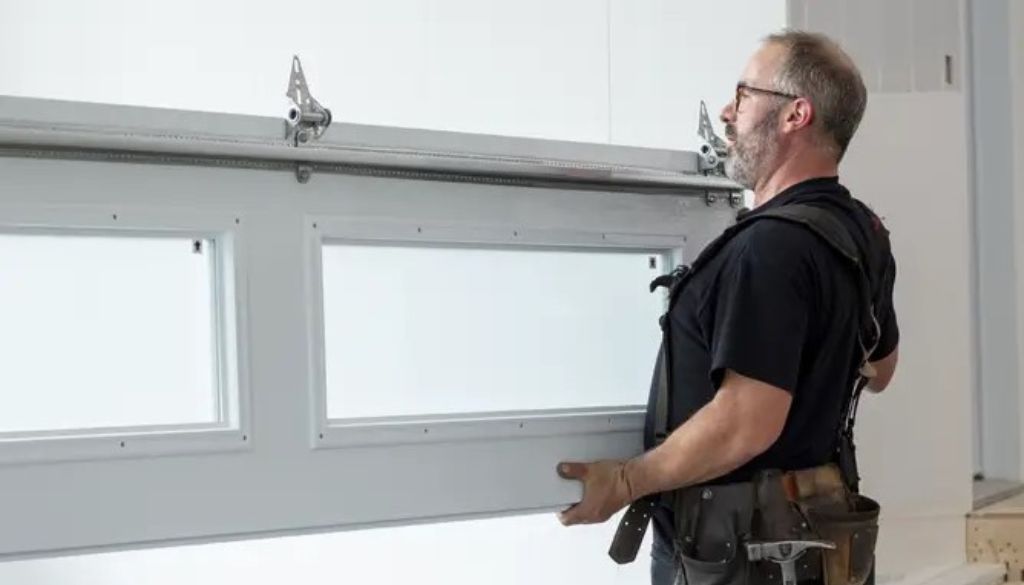
Garage door rollers and garage door tracks create predictable pinch points, but confined work areas make them easier to forget. When the installer’s attention is on a fastener or alignment mark, a hand may drift into the path of a roller. When two people lift a section, one person may grip near a hinge or track because there is no better place to stand. Gloves help with handling sharp edges, but they do not eliminate crushing hazards.
The safest method is to identify pinch points out loud before moving parts. This may feel overly formal, but it works. On a narrow installation, saying “hands clear of the track” before lifting a section creates a pause that prevents instinctive grabbing. The same applies before cycling the door after adjustment. Everyone in the garage should know that the door is about to move.
Track work should not be rushed. Misaligned tracks can cause rollers to bind or wear unevenly. If the garage is too tight to sight down the track comfortably, use short checks from different positions rather than relying on one awkward view. Fasteners should be secure, but tightening should not distort the track. Small installation errors often show up later as noise, vibration, or repeated garage door troubleshooting calls.
Garage door lubrication belongs in this discussion because dry rollers, hinges, or other moving points can mask installation quality. A dry system may sound rough even if aligned correctly, while fresh lubrication may temporarily quiet a mechanical issue. Lubrication should be part of garage door maintenance, but it should not be used to hide binding, poor balance, or damaged hardware.
Temporary power, controls, and accidental operation
During installation, an automatic opener may be partially assembled, wired, adjusted, or tested. This is a vulnerable stage. The door may not have full safety features active yet. Sensors may not be aligned. Travel limits may not be set. The opener may behave unexpectedly if someone presses a wall control or remote.
In confined garages, accidental operation is especially dangerous because workers may be standing in the door path, reaching near the opener arm, or adjusting tracks. Remote controls should be kept away from children and away from casual use during the job. Wall controls should not be treated casually either. Before testing, announce the test and make sure everyone is clear.
Power management should be deliberate. Energize the opener only when the installation is ready for that step. De-energize it when making adjustments that should not involve movement. Follow the owner’s manual for the specific unit. Different products may have different procedures, and assuming every opener behaves the same way is poor practice.
The emergency release should also be understood before testing begins. In a confined space, the installer needs to know how to separate the door from the opener if troubleshooting requires manual movement. That does not mean pulling the release without thinking. It means knowing the system’s state, controlling the door, and following proper procedure so the door does not move unexpectedly.
A final safety test should feel boring
The end of a garage door installation should not feel dramatic. If the work has been staged properly, the final testing process is calm, methodical, and uneventful. The door travels smoothly. The opener reverses when it should. Sensors stop the close cycle when blocked. The installer observes, adjusts as needed, and retests.
A practical final test sequence can stay short, but it should never be skipped.
- Operate the door through full open and close cycles while watching tracks, rollers, cables, and opener movement.
- Test the photoelectric sensors or equivalent entrapment protection to confirm the door will not close through the protected area.
- Test the safety reversal function according to the owner’s manual, and do not leave the system in service if it fails.
- Confirm controls and remotes work correctly, then place remotes where children cannot reach them.
- Review monthly safety reversal testing and basic garage door inspection expectations with the owner.
This is where professional judgment matters. If the opener fails to reverse, the answer is not to explain it away because the door is new or the space is tight. The system needs adjustment according to the owner’s manual or inspection by a qualified professional. If sensors are inconsistent, the job is not done. If the door binds, drags, or behaves differently on the second cycle than the first, keep troubleshooting.
A safe final test may add time, but it protects the homeowner long after the installer leaves.
When confined conditions justify rescheduling or redesign
Some garages are merely tight. Others are not ready for safe work. There is a difference. If the installer cannot place a ladder securely, cannot move door sections without twisting dangerously, cannot keep bystanders out, or cannot test the system through full travel, the safer choice may be to stop and correct the conditions.
That may frustrate a homeowner, especially if they took time off work for garage door replacement. Clear explanation helps. The issue is not convenience. It is safe installation and safe future operation. A door that cannot be properly tested should not be turned over for daily use.
Occasionally the right answer is a change in plan. Storage may need to be removed from ceiling areas. Wall-mounted items near the tracks may need relocation. The opener location may need review. A damaged or poorly balanced existing door may need garage door repair before a new opener is installed. In older installations, replacing one part can reveal neglected maintenance elsewhere.
The professional approach is to separate cosmetic inconvenience from safety-critical issues. A scuffed wall is annoying. A non-reversing opener is dangerous. A box near the wall is workable if it does not interfere. A sensor that gets blocked every time the trash bins return to their normal spot is not workable. Confined spaces require that kind of practical judgment.
Homeowner handoff is part of the installation
The safest garage door installation includes a clear handoff. The homeowner should know what was installed, how the safety features work, and what to check over time. This does not need to become a lecture, but it should be specific enough to matter.
Demonstrate the garage door sensors. Show how an obstruction affects closing. Explain that safety reversal systems should be tested monthly. Make it clear that if the door fails to reverse, the owner should follow the manual for adjustment or call for professional inspection. Remind them to keep remote controls out of children’s reach and to teach children that the garage door is not a toy, not a ride, and not something to race under.
Basic garage door maintenance should also be discussed. The homeowner should pay attention to changes in sound, speed, smoothness, and balance. They should not ignore frayed cables, damaged rollers, bent tracks, or a door that suddenly feels heavy. Garage door lubrication can reduce wear and noise when done appropriately, but it is not a fix for structural or balance problems. If the door behaves differently than usual, early garage door troubleshooting is safer and cheaper than waiting for a failure.
This handoff matters even more in confined garages because the owner’s storage habits can affect the system. A box placed in front of a sensor, a bicycle hung too close to a track, or a broom leaning into the door path can create recurring problems. The installation may be correct on day one, but the garage must remain usable without defeating the safety features.
The standard is safe operation, not just a finished install
A garage door installation in a confined work area succeeds only when the system operates safely, reliably, and predictably in the space where it will actually be used. That means the tracks align despite limited access. The rollers travel without binding. The cables run cleanly. The springs and balance are handled with proper care. The garage door opener functions with required entrapment protection. The garage door sensors are installed, aligned, protected from casual damage, and tested. The safety reversal system works, and the owner understands monthly testing.
Confined work areas reward patience and punish improvisation. The installer who clears the floor, stages parts, respects overhead hazards, avoids awkward reaches, controls power, and tests every safety feature may appear slower at first. In practice, that method prevents injuries, reduces callbacks, and produces a door that the homeowner can trust.
Garage doors are everyday equipment, which is exactly why safety cannot be casual. They open before work, close after school, move while people carry groceries, and operate when children or pets may be nearby. A careful installation, backed by regular garage door inspection and maintenance, keeps that routine ordinary. In this trade, ordinary is the goal: a door that opens, closes, reverses when it should, and never surprises the people around it.